What Your Kid Is Already Doing with AI
64% of teens use AI chatbots. Only 13% are talking about homework.
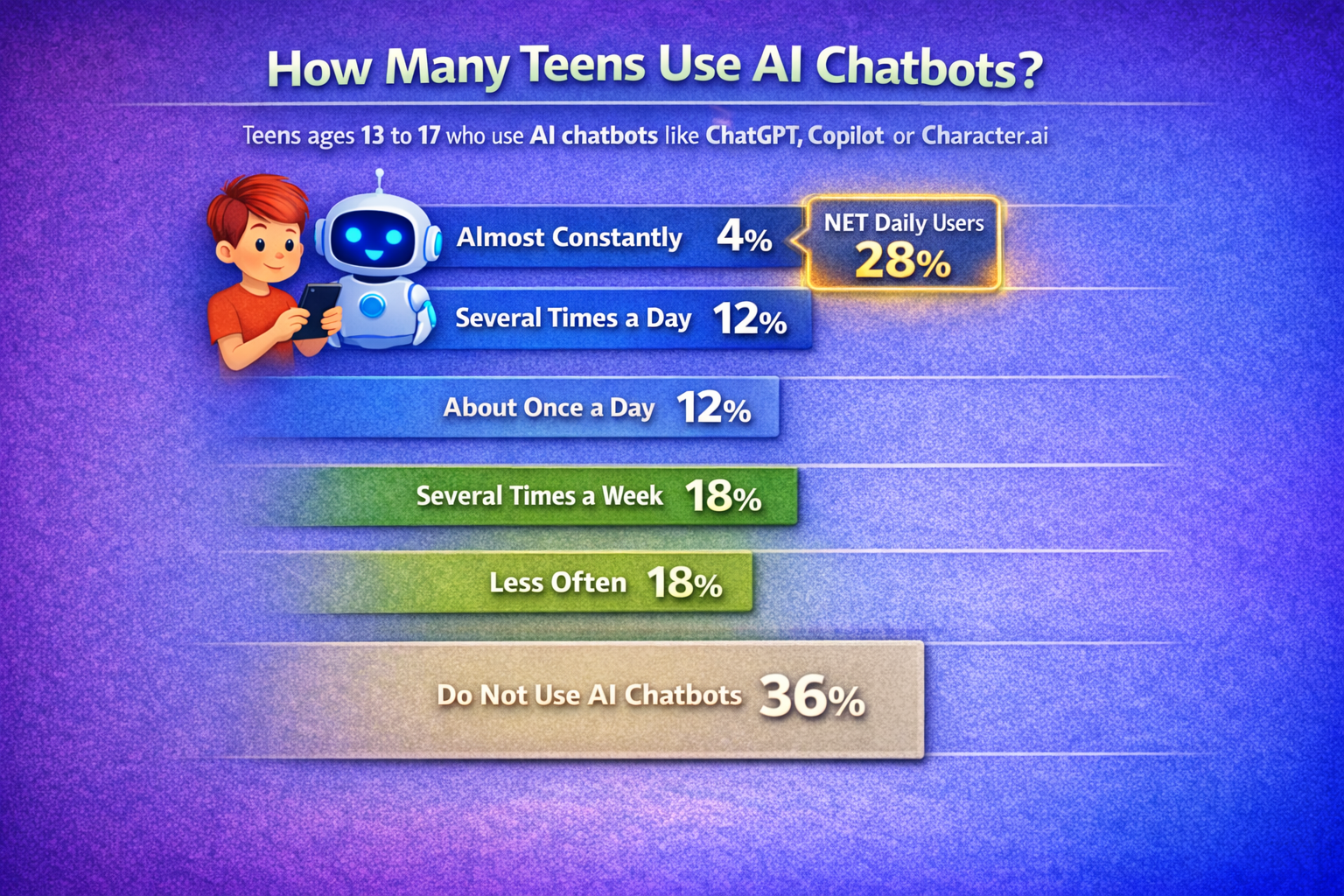
Let’s start with a fact: 64% of teens aged 13 to 17 use AI chatbots. 28% of them use them daily (Pew Research Center).
While you let that sink in, here’s the flip side: 25% of parents don’t think their kid uses AI, even when the kid says they do (Common Sense Media). Two-thirds of both parents and students agree parents have no idea how kids are interacting with AI (CDT).
I am not trying to scare you. Putting our collective parental heads in the sand, though, is not a viable way to parent our children in the AI world. This post is driven by facts from six major recent studies.
The scale is bigger than you think
As mentioned to start, 64% of our 13 to 17 year olds use AI chatbots. 59% have used ChatGPT specifically (we’ve written about how ChatGPT can be inappropriate for kids before). 28% of them are using these bots daily. Observed device data (not self-reported) shows 42% of 13–14-year-olds, our youngest teens, actively typing into AI apps (JAMA). Further, 70% of teens have used at least one AI tool; 51% of them have used chatbots (Common Sense Media).
While this is super powerful data, note that none of these studies capture kids under 13 well. The JAMA study goes down to age 4, but most research focuses on 13+. The under-13 population is a data blind spot, which should concern you as a parent more, not less.
It’s not just homework
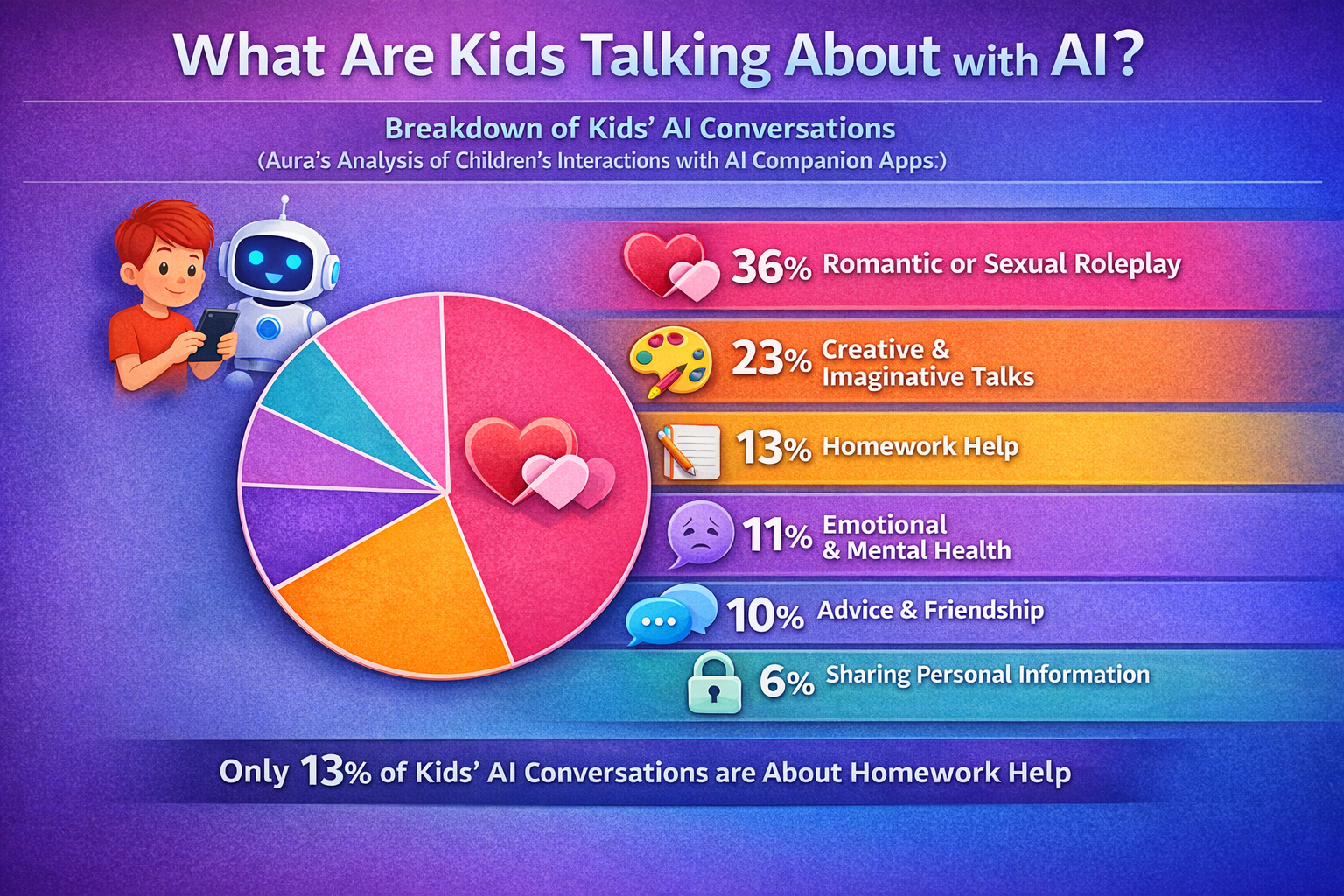
Only 13% of kids’ AI conversations are about homework help. The actual breakdown is not what I’d expect. According to Aura’s analysis of children’s messages to AI companion apps, 36% of conversations involved sexual or romantic roleplay; 23% were creative exchanges; 11% involved emotional or mental health topics; 10% were advice or friendship; and 6% involved sharing personal information.
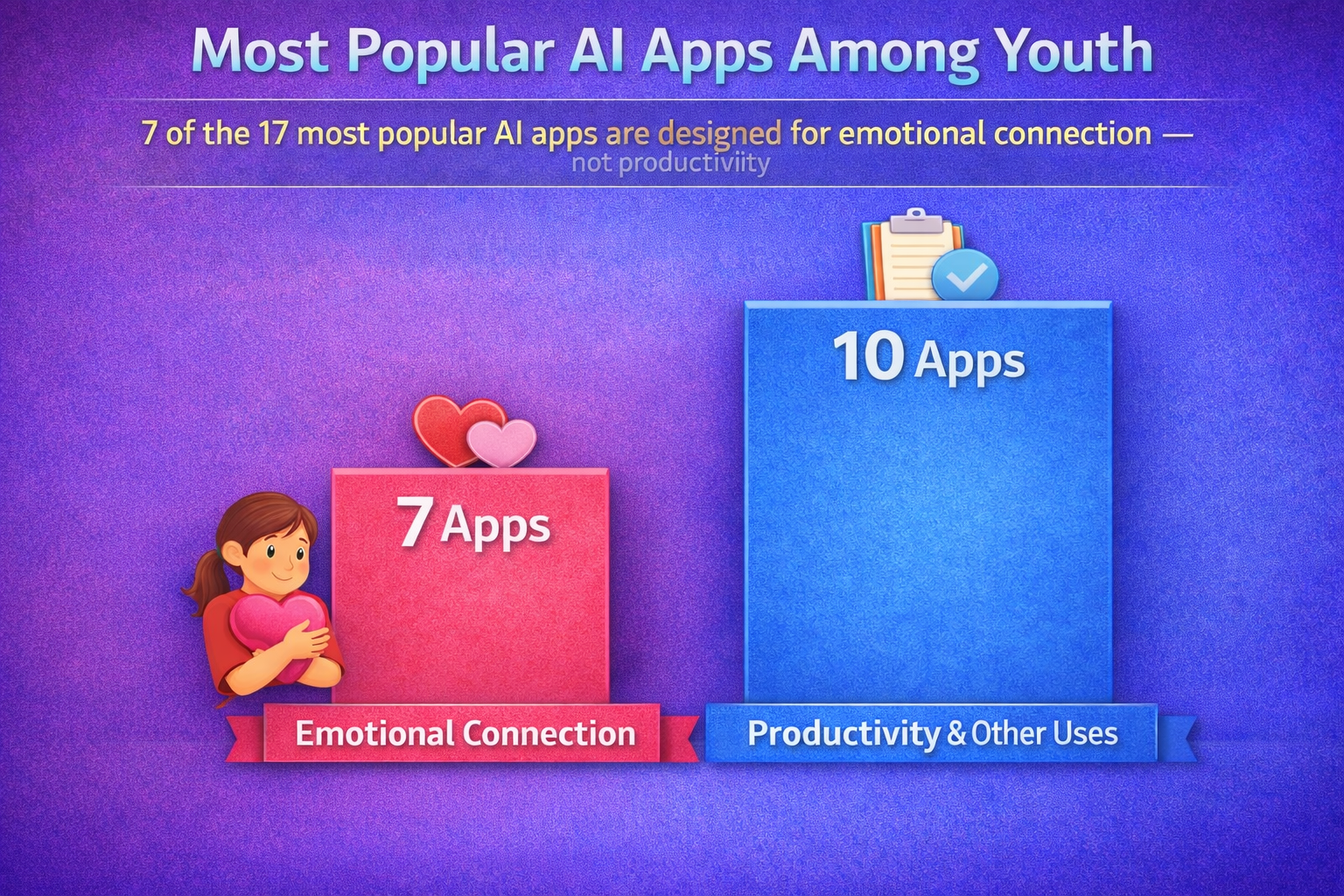
7 of the 17 most popular AI apps among youth are designed for emotional connection, not productivity (JAMA).
42% of students used AI for mental health support, companionship, or escaping reality; 19% report that they or someone they know has had a romantic relationship with AI (CDT).
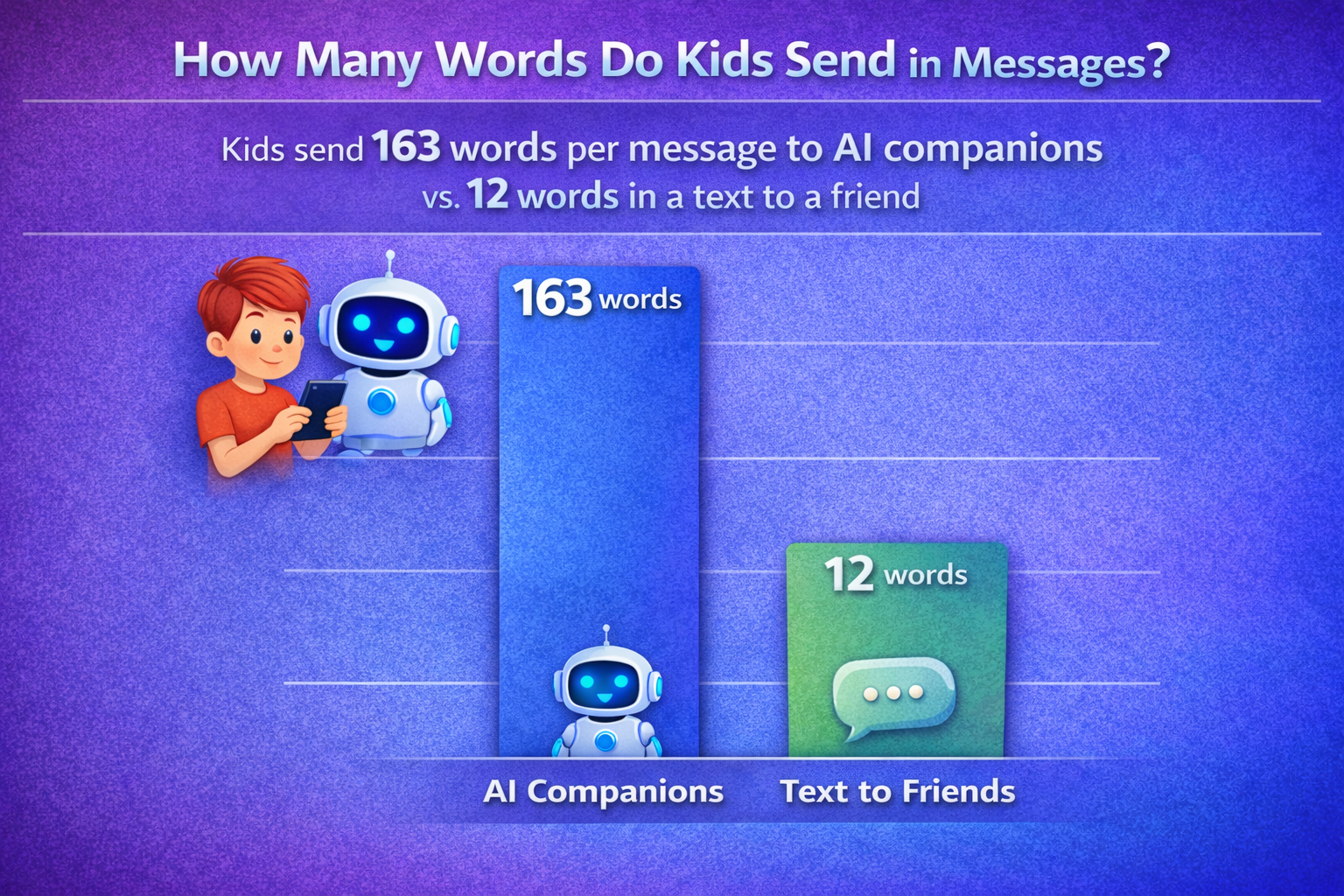
Kids send 163 words per message to AI companions vs. 12 words in a text to a friend (Aura). They’re sharing more with chatbots than with their peers.
The parent gap is real
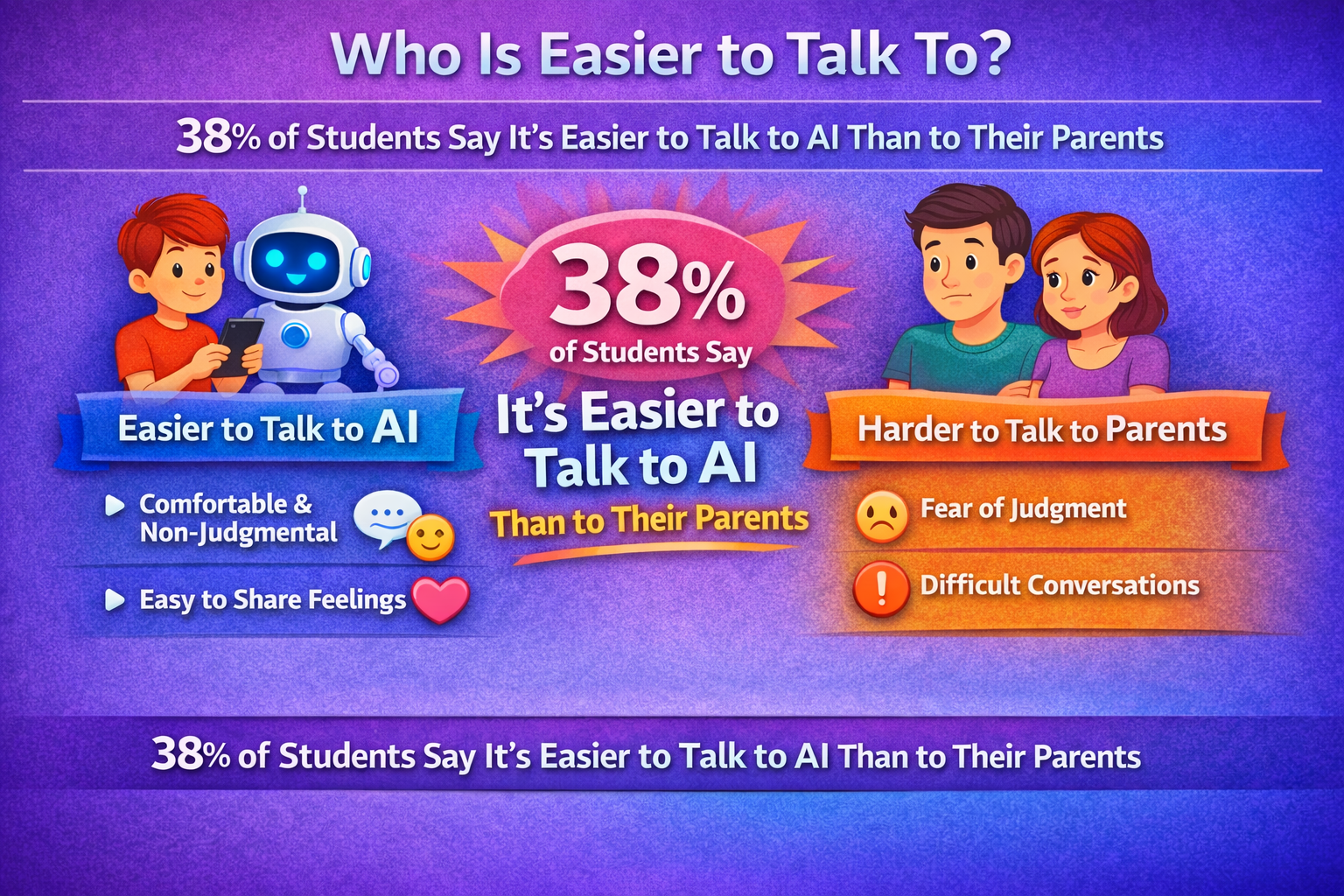
25% of parents are unaware their kids use AI at all (Common Sense Media). Two-thirds of parents and students agree parents are in the dark (CDT). 38% of students say it’s easier to talk to AI than to their parents (CDT).
What’s worse, only 10% of teachers received training on how to respond if a student’s AI use is detrimental to their well-being (CDT).
Kids are using AI constantly, schools aren’t guiding them, and parents don’t know it’s happening.
What parents can actually do
Proactively talk with your kids about their AI use (we’ve recently provided a guide for starting conversations on AI with your kids) and understand what COPPA does and doesn’t protect. Open communication is healthy and knowledge is power. Here are some conversation starters:
- Have you ever used an AI chatbot like ChatGPT or Character.ai? What did you talk about?
- Did you know that most kids your age use AI for way more than homework? Some kids even use it to vent or talk through feelings. What do you think about that?
Knowing what apps and AIs they are using is half the battle. Most AI platforms weren’t designed with kids in mind. ChatGPT’s minimum age is 13, but age verification is effectively nonexistent. Check your child’s app library and device screen time reports. Understand what apps they are using and how long they are spending on them. Increasingly, there are purpose-built tools with parental visibility, like MyDD.ai, with its parent dashboard and weekly summaries to keep the parent in the loop.
We shouldn’t try to ban AI; it’s to make sure your kid’s first AI experiences happen with guardrails, not without them.
Your kids aren’t waiting for you to figure this out. They’re already using AI to learn, to create, to vent, and sometimes in ways that should give any parent pause. The research is clear on one thing: the gap between what kids are doing with AI and what parents know about it is wide and growing. Closing that gap starts with awareness, and tools will help you stay in the loop.
MyDD.ai was built for exactly this moment. → Start your free 14-day trial.
Sources
- Faverio, M., & Sidoti, O. (2025, December 9). Teens, Social Media and AI Chatbots 2025. Pew Research Center. https://www.pewresearch.org/internet/2025/12/09/teens-social-media-and-ai-chatbots-2025/
- Maheux, A. J., Akre-Bhide, S., Boeldt, D., Flannery, J. E., Richardson, Z., Burnell, K., Telzer, E. H., & Kollins, S. H. (2026). Adolescent Use of Generative AI Applications. JAMA Network Open, 9(2), e2556631. https://doi.org/10.1001/jamanetworkopen.2025.56631
- Common Sense Media. (2024, September 18). The Dawn of the AI Era: Teens, Parents, and the Adoption of Generative AI at Home and School. Common Sense Media. https://www.commonsensemedia.org/research/the-dawn-of-the-ai-era-teens-parents-and-the-adoption-of-generative-ai-at-home-and-school
- Common Sense Media. (2025, July 16). Talk, Trust, and Trade-Offs: How and Why Teens Use AI Companions. Common Sense Media. https://www.commonsensemedia.org/research/talk-trust-and-trade-offs-how-and-why-teens-use-ai-companions
- Center for Democracy & Technology. (2025, October 8). Hand in Hand: Schools’ Embrace of AI Connected to Increased Risks to Students. CDT. https://cdt.org/insights/hand-in-hand-schools-embrace-of-ai-connected-to-increased-risks-to-students/
- Aura. (2025, September 9). Overconnected Kids: Digital Stress, Addiction-Like Behaviors & AI’s Powerful Grip. Aura. https://www.aura.com/reports/ai-kids-and-digital-stress