The AI Talk: A Parent's Guide from Age 6 to 17
Practical guidance for parents at every stage.
With the multiplicity of voice assistants, recommendation algorithms, and chatbots, it is near certain that your child is already dealing with AI. Hoping they figure it out on their own isn’t a strategy. We need to be talking to our kids about AI. As daunting as it may seem, you don’t need to be a tech expert to have these conversations.
Our goal… my goal… is to raise children who are critical thinkers and able to use AI effectively as a tool. Here are some guidelines on how to have this conversation with your children at any age.
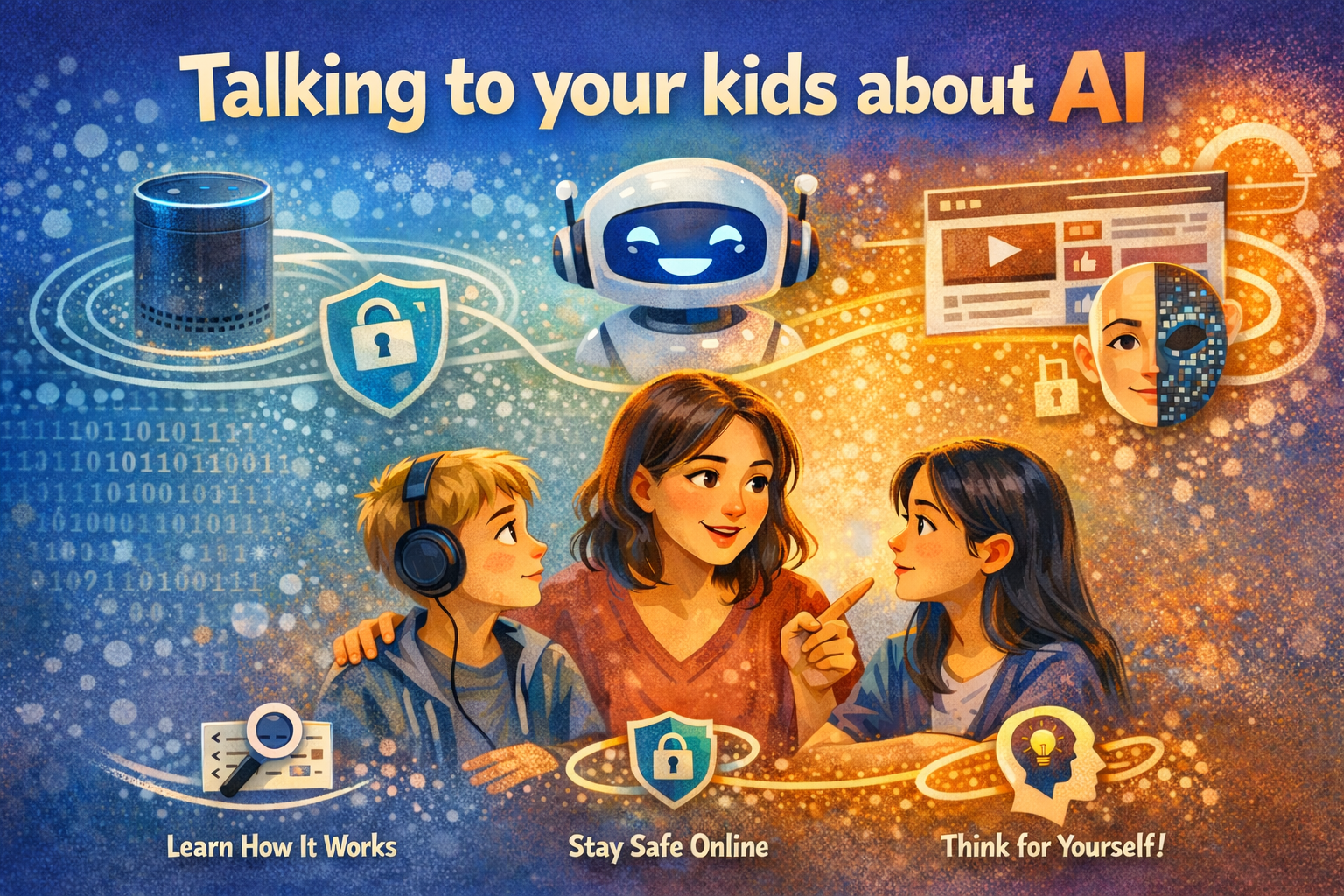
Ages 6–7: “The Helper That Isn’t a Person”
Keep it simple. Keep it short. Make it real to them. Make sure they ask for permission before using it. For example:
Conversation Starter
Alexa, YouTube Kids, Netflix, MyDD.ai… they all use AI to know what to say or recommend to you. AI is a computer that learns. Though sometimes you hear these things speak or write like a person, they are not like a person. There are no feelings; they were built to help us.
Ages 8–9: “It’s Not Magic, It’s Patterns”
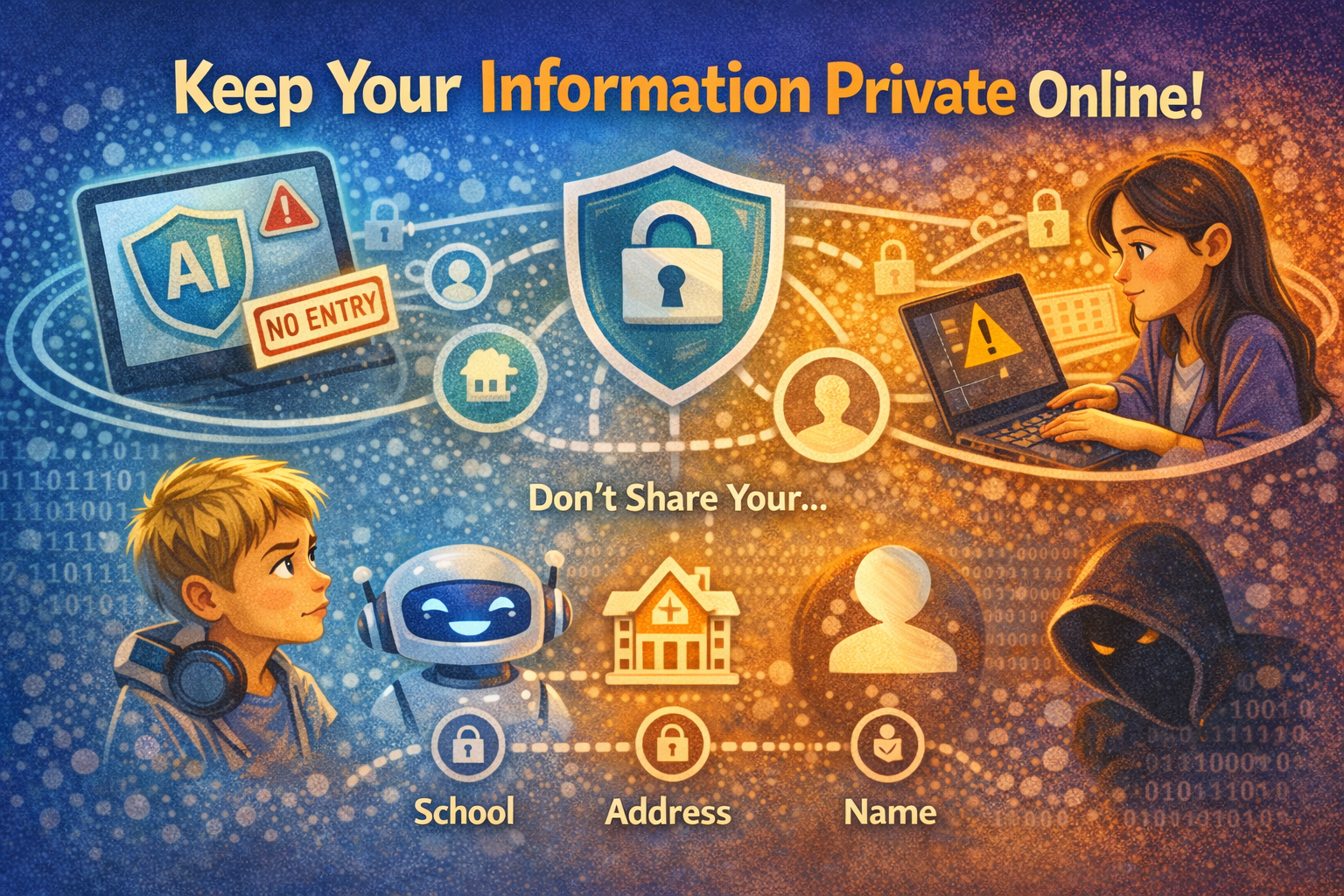
Now that your child knows where AI exists, begin to tell him or her how it works. AI is just pattern recognition. It learns from examples. It can be wrong; it is making guesses and sometimes it guesses wrong. There still aren’t great guidelines for the tech companies on what they can or cannot do with the data we give them, so share that privacy is best: don’t share your name, school, address. For example:
Conversation Starters
Just like how you learn your spelling words, by practicing them over and over, AI learns by “reading” as much as it can and figuring out the patterns over time. Just like you sometimes choose the wrong way on how to spell similar sounds in words (like “slow” and “go”), AI can make mistakes, too, and choose the wrong output.
The same as you wouldn’t tell a stranger your address or school, we shouldn’t tell the AI these things. We want to keep our information private both online and offline.
Ages 10–12: “Who Made This and Why?”
AI is built by for-profit companies. They are incentivized, first and foremost, to make money and keep their company growing. Simply put, their goals are different than to serve your child well.
As mentioned above, the AI learns patterns from as much data as possible, much of this data comes from the internet. There are places on the internet that are very one-sided; the AI can learn these patterns, too, and output them.
We need to teach our children to be skeptical of the content they see, too. When something seems too perfect or outrageous, we should ask ourselves if this is real or a deepfake.
Conversation Starters
Have you heard of a deepfake? It is a video or photo that looks real, but was created by AI. How can you tell? You really can’t anymore. If it seems too perfect or outrageous, it probably isn’t real.
The same as the AI can sometimes be wrong, it can also sometimes be biased. It has learned, sometimes by accident, how to be racist or political. The companies that build AI don’t always prioritize fixing these issues, especially when engagement is high. Always be critical of what you see from AI. Use your own judgment to know if it is right for you or not.
Ages 13–15: “You’re the Human in the Loop”
AI is a tool. If you use it to create something, you are the owner of the output, not the AI. Your child needs to know that they are responsible for the social media posts they create or the homework they submit. If it is wrong or inflammatory, the consequences belong to them. They can’t then turn around and say, “The AI said it! Not me!”
When you use AI to do your homework, that isn’t learning. When you use AI to help you understand, that is beneficial. In the end, your child needs to retain the ability to think. If they outsource their thinking to AI, they will fall behind and become subservient to those who put in the effort to learn.
Conversation Starter
If you copy something and submit it as your own work, that is cheating. The same as it was cheating when you were searching for the answer, it is still cheating when you copy something the AI tells you. Also, this isn’t learning. In the long term, the less you know yourself the worse off you’ll be. No one regrets learning how to think for themselves.
Ages 16–17: “Preparing for an AI-Integrated World”
AI is quickly and continually changing how we work, learn, and operate in this world. The line for ethical use of AI is gradually formalizing. We need to lead our older children to default to thinking for themselves first, leveraging AI to polish their work rather than do it for them, and to understand what their personal data is worth to the companies running these tools. Our children need to know how to think for themselves, first and foremost. If it looks too outrageous or perfect, it probably is AI generated.
To repeat, AI is a tool. AI does not have feelings and cannot be a friend or therapist, even if it feels like one. AI can seem like a convenient substitute to friends, family, and caregivers, but it is not. Everything you input into AI belongs now to the companies who run the AI. It should make you uncomfortable to give away personal details of your life to a stranger… a strange company.
Conversation Starter
Have you ever noticed it’s sometimes easier to talk to AI than to a real person? That’s not an accident… these companies design it that way to keep you engaged. But humans push back, disagree, and tell you when you’re wrong. That’s what helps you grow. AI just tells you what you want to hear.
It’s an Ongoing Conversation
This isn’t a one-time conversation. I’m betting that many of these talks will lead to more questions, concerns, and learning as a family. That’s how it should be! It isn’t always going to be clear, but understanding these tools is pivotal to our children’s collective future.
Don’t be alarmed when kids come to you with questions! Keep the door open and encourage the conversation.
Understand that your children will follow your lead. Lead by doing this yourself well. Model the good behavior to them and explain your thinking.
Had the talk? Now give them a safe place to explore. MyDD.ai matches your child’s age with the right guardrails and keeps you informed every step of the way.