Will Your Children be Ready for the AI Future?
Most teens already use AI. The kids who learn to use it well will pull ahead and the ones who don't will fall behind. Here's how parents can start.
We now live in a world where most kids, specifically teens between 13 and 17, have used AI chatbots1… AI companions2… This is profoundly weird to us, the parents of these teenagers (but… even if your kid is 8, this is the world they’re stepping into). To talk to our companions (what I would call friends), we had to first go through the hardship of making them. The word making has really changed definitions… In the last sentence, I mean going out or being dragged out of the house, seeing someone interesting, coming up with the courage to say hi, then figuring out over time what they like and deciding if that matches with your interests.
“Did we just become best friends? Yep!”, Step Brothers
Now, making friends can mean signing into a service and choosing from a menu. No friction. No courage. Only satisfaction (or not… which just means clicking the X and choosing again).
That is only step 1, too. Maintaining human friends was a skillset of its own, too. You had to call them on the house phone or ride your bike to their house, say hi, politely, to their parents and ask if Ryan was home, then play… in person… usually outside… on our own. Sometimes it went wrong and ended in tears. Sometimes friendships end (or go on hold) and you have to start all over.
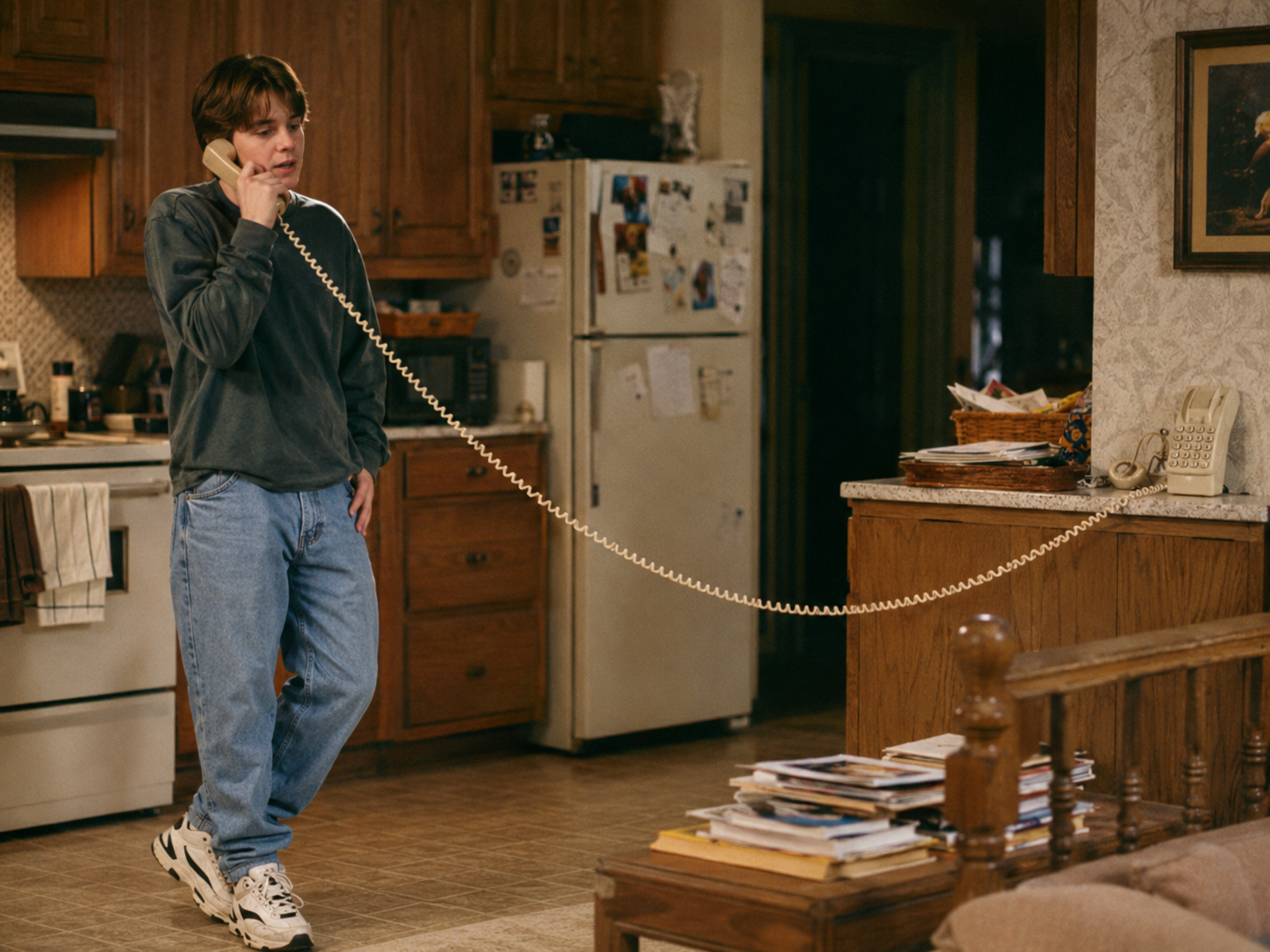 Image Credit: ChatGPT
Now, there is potentially none of that. Your kid just signs back in and is greeted warmly, regardless of any history or time that has passed. No hard questions, expectations, maintenance.
Seems clean-cut right? My kids won’t use AI. What’s wrong with that, though, is this is but one aspect of AI. AI is here to stay and knowing how to use it well will set one apart from those who do not have the same skill. You can learn how to use a knife safely instead of having your mom follow you around to cut your food, just as you can learn to use AI well your whole life without losing your ability to interact well with other humans.
 Image credit: ChatGPT (also… weird that there are two plates)
Those who know how to apply AI will have the skills needed in our future world; the others may be at the mercy of those who do.
We can’t just hand our untrained children the knife, though, and hope for the best. We need to show them how to use the tool correctly. Give them safeguarded versions to start, which advance in step with their ability, all while being able to supervise their progress from an appropriate distance, where intervention is possible before real harm occurs. With that, we unlock the best outcomes while mitigating the worst harms, kids who can thrive in an AI world without losing the parts of childhood that matter.
This is why I’ve built MyDD.ai. Parent visibility and child wellbeing are first class citizens; these are our foundation. Your child gets age-appropriate chat (as they grow, the bot grows with them). Parents know at all times what their kids are doing: you get weekly summaries, real-time alerts, and access to every chat.
MyDD.ai is already helping families across 17 states, scored an 88.3% on the KORA benchmark, and is working with researchers in the US and UK to ensure we are using research-backed mechanisms to keep our children safe. We’ve developed a parent guide and we’re working to improve how we instruct our kids on how to use AI well, every day.
Our children and teens are using AI, whether we like it or not. Whether we understand it or not. Let’s give them the best chance to thrive in this new world. Start a 14-day free trial of MyDD.ai, then under $7/month billed annually.
Footnotes
-
64% of teens use AI chatbots. Pew Research, Dec 2025, Teens, Social Media and AI Chatbots 2025 ↩
-
72% of teens have used AI companions. Common Sense Media, Jul 2025, Talk, Trust, and Trade-Offs ↩