Is 'The AI Doc' the AI Conversation Parents Actually Need? (A Founder's Take)
A data scientist and parent reviews The AI Doc and explains why the doomer-vs.-accelerationist framing fails families with kids at home.
If you’ve watched The AI Doc looking for guidance on how to think about AI with your kids in the house, you probably came away more anxious than informed. I finally got a chance to watch it and I… I didn’t love it. Here’s why the documentary’s framing fails parents, and what I think the conversation should actually sound like.
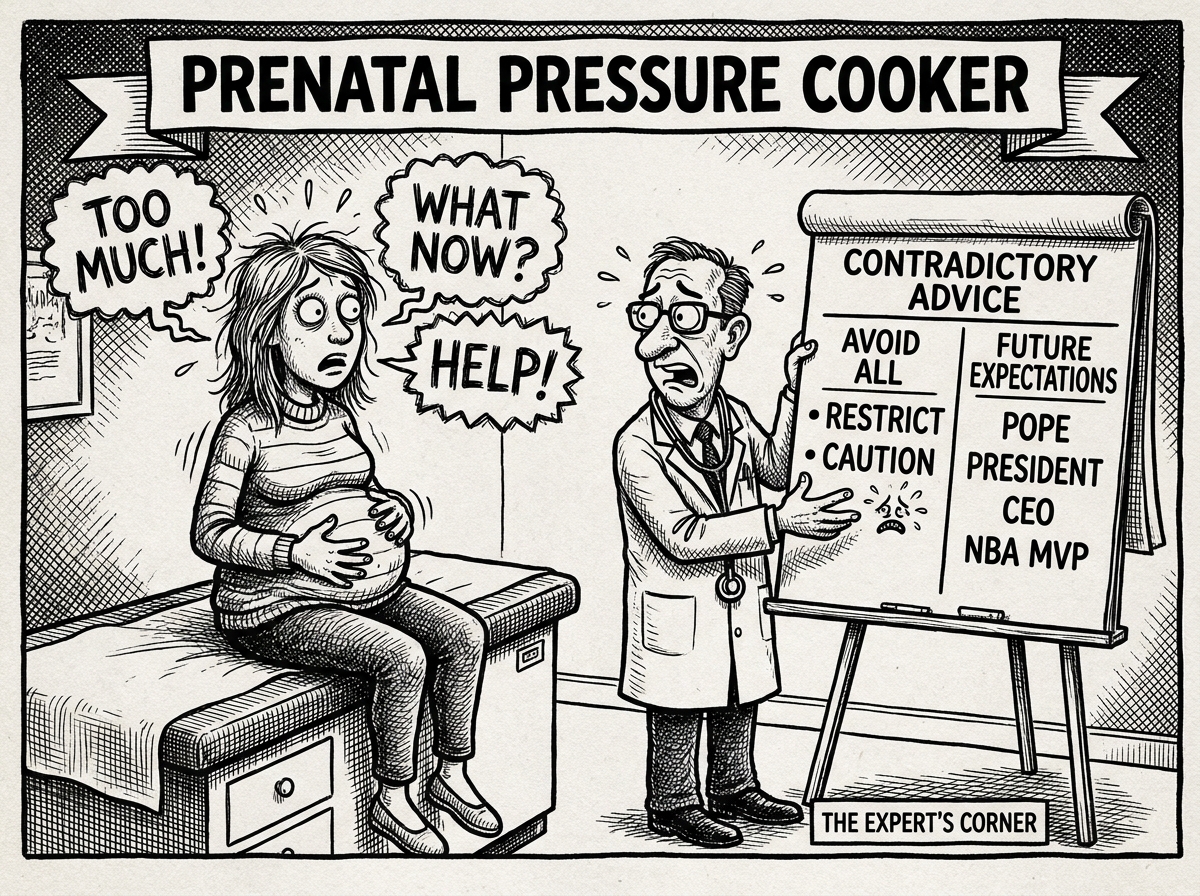
I’m not naive…1 I know this world’s arguments are driven by the extremists in the minorities. I’m just not so sure that parents’ introduction to any topic, and especially the AI topic, should be a who’s who of extreme opinions. It’s as if we sat down a newly pregnant mom and started the conversation by telling her all the ways her unborn baby could die, and then in the next breath moved on to tell her that her child could become the Pope or the President or a CEO or an MVP in the NBA. Her head would explode.
My head is exploding. No decent doctor would ever do this. For one, it sets expectations all wrong, these are possibilities but they are low-probability possibilities. And maybe that’s where this metaphor breaks down: in childbirth, our doctors are aware and have experience in the bad outcomes, and they are prepared to tell you more when and if it is ever necessary. Back to The AI Doc: we’ve somehow found it acceptable to invert the conversation and the documentary gives a prominent place at the table to extreme possibilities. This forgets that the extremes are, by definition, totally unlikely.
AI Doomers
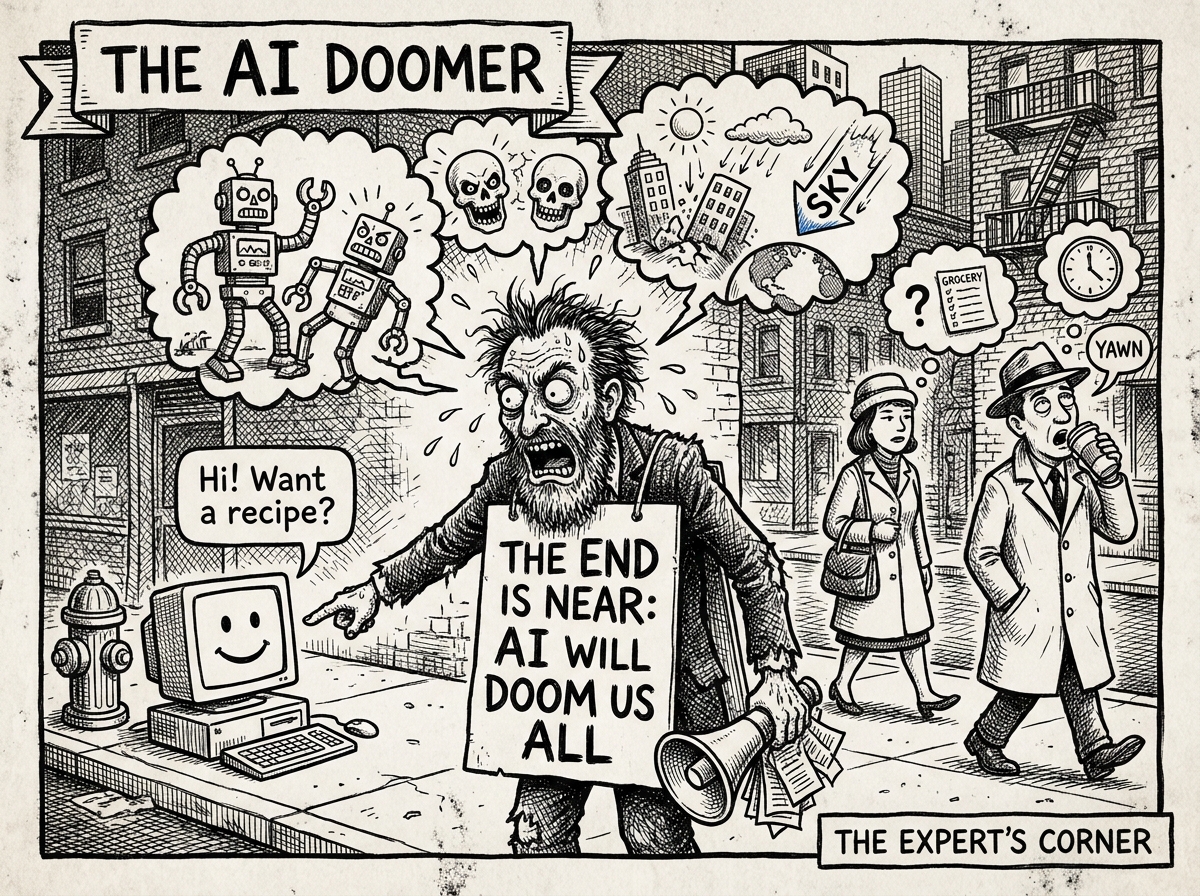
The movie moves through four chapters, starting with the doomers.
The AI doc introduces a number of prominent AI doomers. These folks explain to us how the AI has “misbehaved” in experiments (admittedly, shockingly bad behavior) and then they extrapolate what that means for humanity as the technology improves. Let me save you 30 minutes of discomfort: the picture they paint is bleak.
Let me say… as a guy trying to figure out marketing and sales, fear is a big motivator. I understand why the directors chose this and why these people lean into it, I just find it unhelpful to start a conversation this way.
This iteration of AI will not end the world or become sentient. That’s not how it works. That’s not how any of this works.
AI Accelerationists
The film cuts to a stop-motion illustration of the director and his wife2 where the director is overwhelmed with negativity. Frankly, at this point in the movie for me, same.
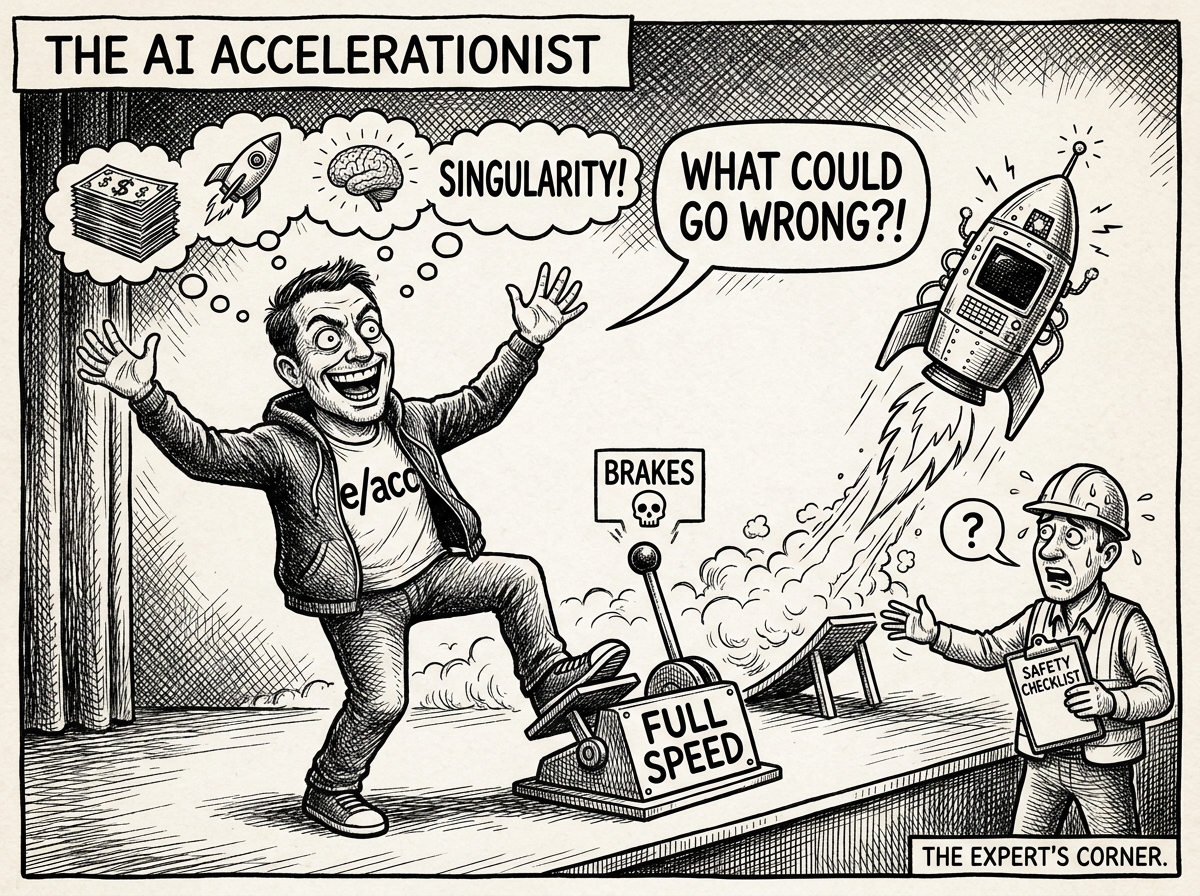
So on to the other extreme: the accelerationists. These people see only upside. The AI, or its future versions, will solve every problem. People will be freed of financial constraints. Everyone will be perfectly educated and well fed. You’ll be able to pick any non-productive hobby you want and pursue it with abandon. We’ll solve illness and disease. It is going to be heaven. The only thing we have to do is focus all of our resources to this to get there as fast as possible.
The rest, apparently, just happens.
Overall, it seems fanciful and naive. Like, actually, not working and a lifetime of passion projects doesn’t sound totally ideal to me. Some of it sounds good, but I kind of want autonomy and struggle in my life. I think making it easier by some measures is good, but this just ain’t it for me. Even if it was, I have so many questions.
“Trust us, it’s going to happen” is not good enough.
The Regulators
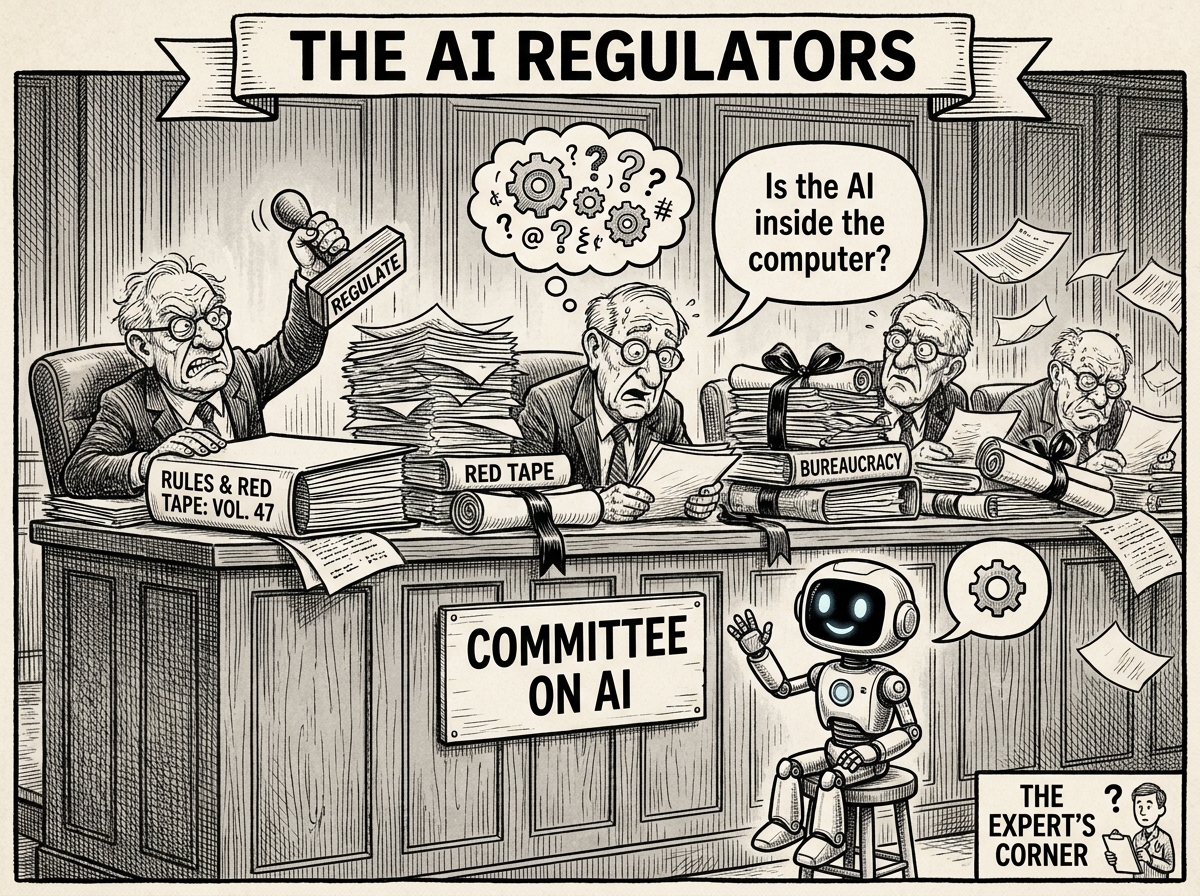
So… awkward shift in this writing and the movie… if either of those scenarios happen, why do we need rules? We’ll be dead or we’ll be in utopia.
The regulation piece is nearest and dearest to me. So far these companies have run roughshod over the world. Children, adults, neighborhoods, jobs, and economies are affected. Seemingly everyone and everything is affected and we haven’t really had the proper public discourse to figure out what is correct. The CEOs (more on them momentarily) have also said “trust us” and the lawmakers and regulators, willingly and unwillingly, by and large, have said “sure.”
I find some of these regulator views overly doomerish, but I do feel as though we need regulation. How that happens, I’m not sure… it does feel like it will be slow going until we have a change in administration, though potential new executive orders may be a sign of change.
The CEOs
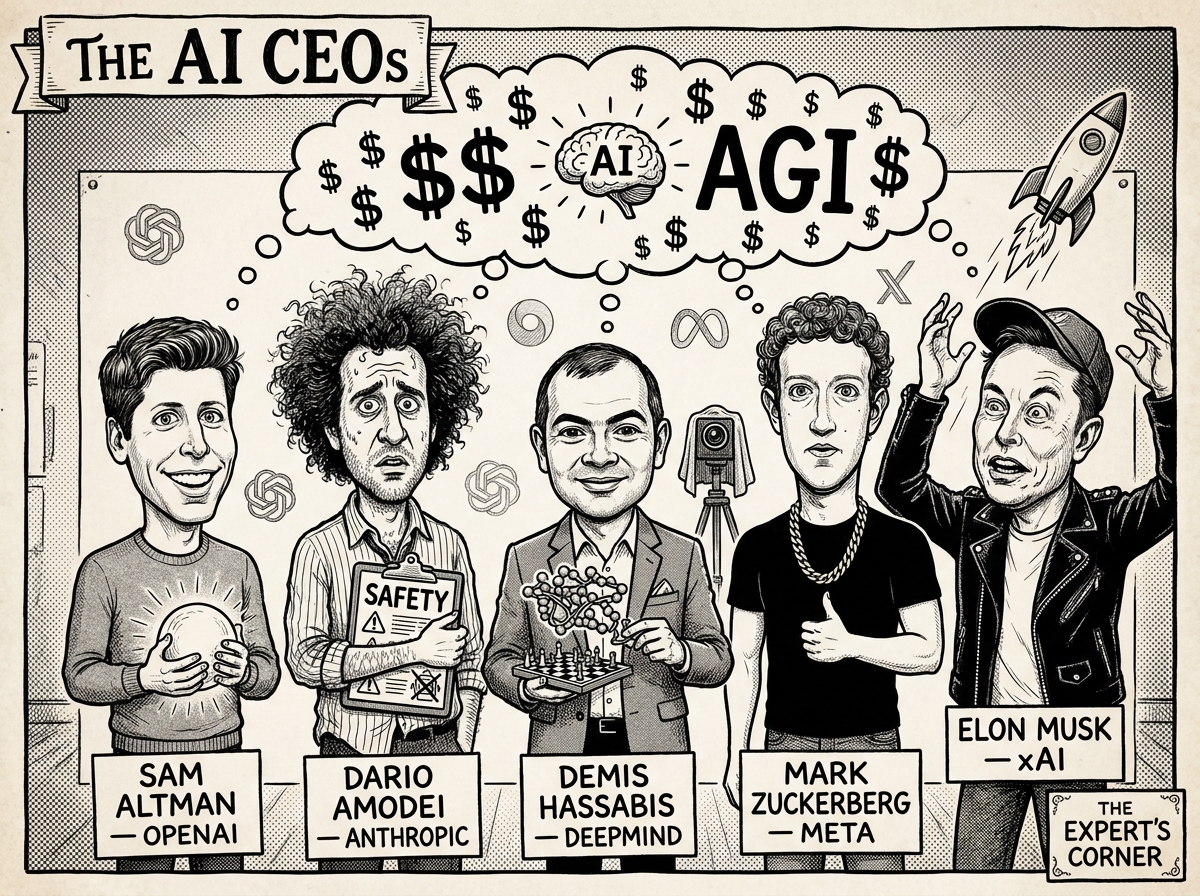
Then we get the CEOs talking and, frankly, the picture doesn’t moderate.
Sam Altman, CEO of OpenAI (ChatGPT), appeared robotic and eager to leave the conversation. Dario Amodei, CEO of Anthropic (Claude), looked schlumpy, which undermined his more level responses. Demis Hassabis, CEO of Google DeepMind, whose team has been behind landmark AI breakthroughs like AlphaGo and AlphaFold, was notably underfeatured, probably due to unextreme opinions. Two of the more controversial CEOs, Elon Musk (xAI) and Mark Zuckerberg (Meta), declined to attend. Leaving aside those leaders who were not invited, I left with a pit in my stomach that this is who is leading us to doom and/or utopia (I jest). Again, fear.
What This Means for Parents
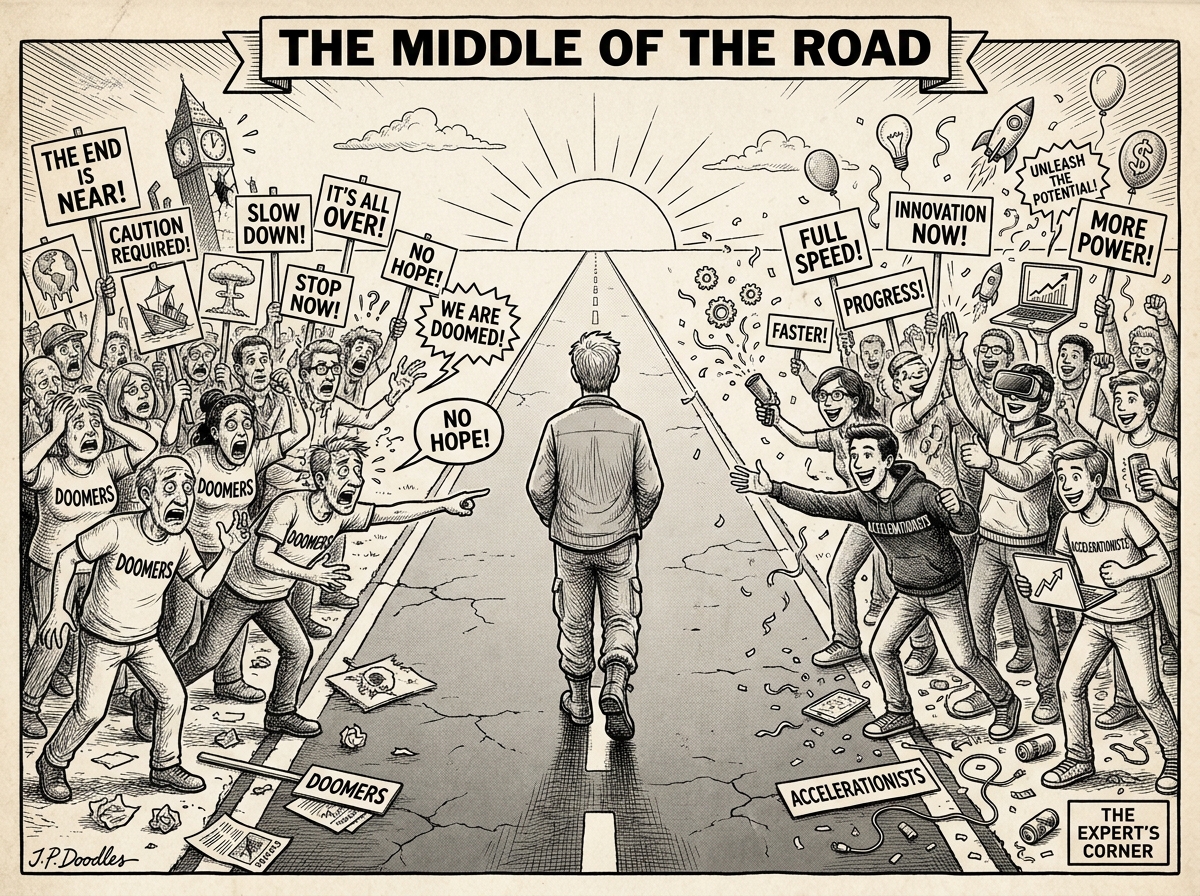
I guess moderate views don’t sell movies and don’t catch people’s attention.
The directors do present truly the potential outcomes and opinions, they just left out a big swath that’s in the middle of the road. I truly believe that we can navigate this AI thing. It will be hard, and we’ll make some mistakes (more than we already have), but it will be worth it. Our world will change… is changing… our parents and children have all new opportunities and concerns. We need companies to better prioritize safety (especially for our kids), our public institutions to create fair and thoughtful rules and hold these creators accountable, and we need to educate our parents and children so they can face these things with the proper fear, hope, and reverence. The human race will make it through this challenge and come out on the other side better for it.
What this means for your house
If the doc left you anxious instead of equipped, here’s how I’m translating the four chapters into how I talk to my own kids:
-
Don’t open the AI conversation with worst-case scenarios. The doomer framing messed me up, and probably you too, but it’s the wrong starting point for a kid. Lead with what AI is actually doing in their life right now (homework help, image generation, the chatbot their friend showed them), not with extinction-level hypotheticals. Save the bigger questions for when they’re old enough.
-
Apply the same standard to AI that you’d apply to anything else you let in the house. You wouldn’t accept “trust us” from a streaming service, a video game, or a new app. Don’t accept it from an AI company either. Ask what data it collects, who can see your kid’s conversations, and what happens when something goes wrong. If the company can’t answer plainly, that’s your answer.
-
Pick the middle path on purpose. Don’t wait for regulation to catch up. Rules are coming, slowly. In the meantime, the choice is yours: full restriction, full access, or something thoughtful in between. The middle road is the harder one because it requires you to set up structure now: which tools, what oversight, what conversations. It’s the one that actually prepares your kid for the world they’re going to live in.
That’s why I built MyDD.ai, an AI chatbot for kids with parental oversight built in, not bolted on. Free to try, then under $7/month billed annually. Start your free trial today.